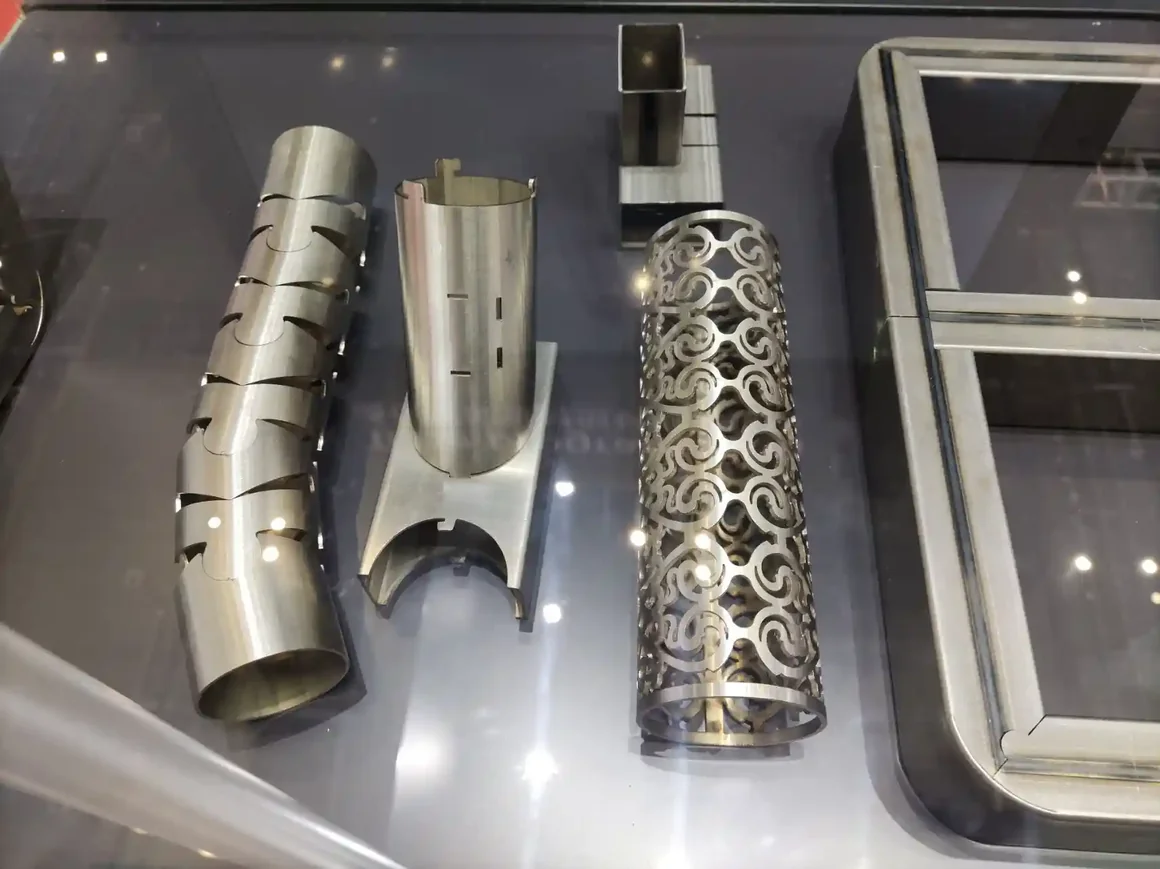
Pipe Profiler vs Pipe Cutter vs Pipe Beveling Machine
A pipe cutter makes square or mitre cuts. A pipe beveling machine prepares the pipe end for welding — V-bevel, J-prep, facing. A pipe profiler does the 3D work: it cuts the curved saddle where a branch meets a header, the fishmouth on a truss chord, or the cope on a handrail joint, and can usually add the bevel in the same pass.
If your shop only cuts straight lengths, a cutter is enough. If welders spend time grinding saddles by hand, a profiler removes that step and makes the fit-up repeatable.
Coping, Notching and Fishmouth Cuts
Coping is cutting the end of one member to fit the profile of another — the classic example is a pipe branch on a header. Notching removes a section from the pipe wall so two tubes can cross or sit flush. Fishmouth (also called a saddle cut) is the curved cut that lets a branch pipe sit against the outside of the main pipe.
All three are the same geometric problem — the intersection of two cylinders — and all three are what a profiler is built to solve. On a manual bench they are marked, cut and ground; on a profiler they are generated from the model and cut in one setup.
Plasma or Laser for Pipe Profiling
Plasma profiling handles thick wall and large diameter at a lower capital cost, and it is the usual choice for structural pipe and heavy wall headers. Laser profiling is faster and cleaner on thin wall, small holes and stainless or aluminium, and it leaves an edge that often needs no secondary operation.
In practice the decision follows three numbers: wall thickness, pipe diameter and the edge quality the weld procedure requires. A shop that profiles both heavy headers and thin stainless usually keeps two technologies rather than compromising on one.
Cut-and-Bevel in One Setup (End Prep)
A profiler that also bevels removes a second handling step: the pipe is cut, the saddle is formed and the weld preparation is machined before the part leaves the machine. That matters most on spool fabrication, where every joint needs a consistent bevel and re-clamping a long pipe is expensive.
Typical preparations are V-bevel, J-prep, compound bevel and facing. The right one is set by the welding procedure, not by the machine — the machine only has to reproduce it consistently.
Which PCL Machine Fits Your Pipe
PCL builds three levels of pipe processing, and the right one depends on diameter and wall thickness:
- Large-diameter pipe profiler (rotary) — 600–2000 mm steel pipe, saddle cuts and bevels in one setup.
- CNC tube laser LT240 — small to medium tube, holes, slots and mitres at laser speed.
- Air plasma pipe beveling machine — cut-and-bevel end prep for pipe that is profiled elsewhere.
If you are not sure which category fits, send the pipe diameter, wall thickness and a drawing of the joint; our engineers will tell you whether a profiler, a tube laser or a beveling machine is the right spend.
FAQ
What is the difference between a pipe profiler and a pipe cutter?
A pipe cutter makes square or mitre cuts. A pipe profiler cuts 3D contours — saddles, fishmouths, copes and notches — so a branch pipe fits the main pipe without manual grinding.
What is a fishmouth cut?
A fishmouth (also called a saddle cut) is the curved end cut that lets one pipe sit against the outside of another pipe for welding. On a profiler the curve is generated from the pipe diameters and the intersection angle.
Can a pipe profiler bevel as well as cut?
Yes. A profiler with a beveling head (or a cut-and-bevel machine) produces the weld preparation — V-bevel, J-prep or compound bevel — in the same setup as the contour cut.
Plasma or laser for pipe profiling?
Plasma handles thick wall and large diameter at lower capital cost. Laser is faster and cleaner on thin wall, small holes and stainless or aluminium. The choice follows wall thickness, diameter and edge quality.
What pipe diameter can be profiled?
It depends on the machine: tube lasers typically cover small to medium tube, rotary profilers cover large diameter pipe, and heavy-duty cells cover structural sections. The product pages list the working ranges.
Do I need CAD/CAM software for pipe profiling?
Yes. Profiling is driven by a 3D model or a parametric cut library; the software converts the intersection into a tool path and exports it to the controller.