Quick Answer
Match the machine's width to your widest part (common ranges run 200–1,800 mm), decide wet vs. dry based on material and finish sensitivity, and choose single-head or double-sided based on production volume.
Deburring machines range from compact single-head units to wide, multi-stage production lines, and honestly, brand matters a lot less than most buyers expect — what actually decides the right fit is your part width, your material mix, and how many pieces you're pushing through a shift. Before you get on the phone with a supplier, it's worth having straight answers to a handful of practical questions.
Start With Your Part Width and Production Volume
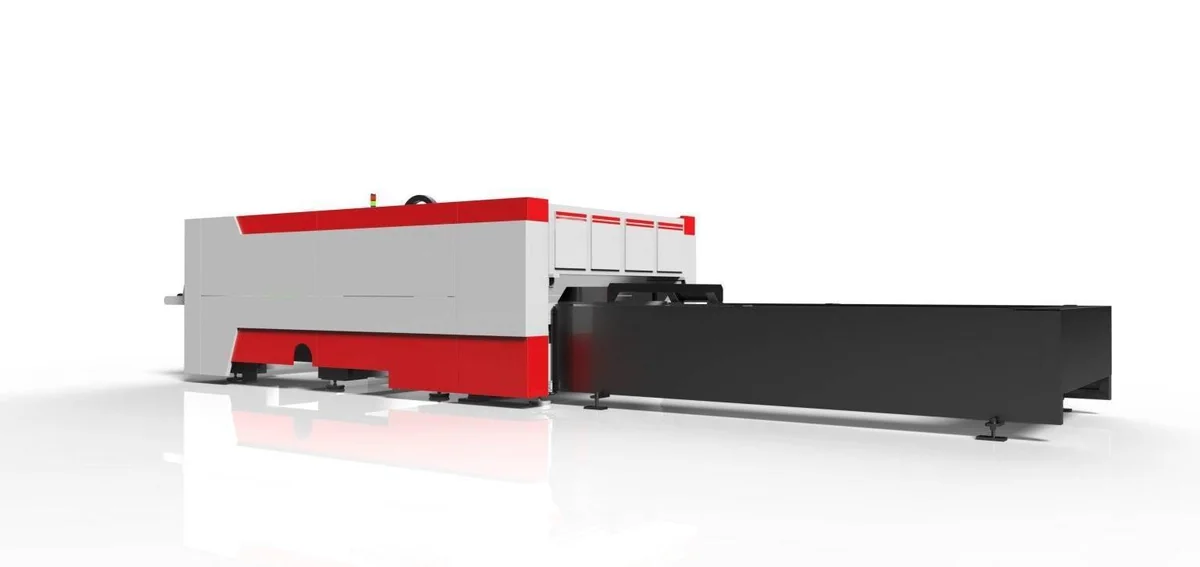
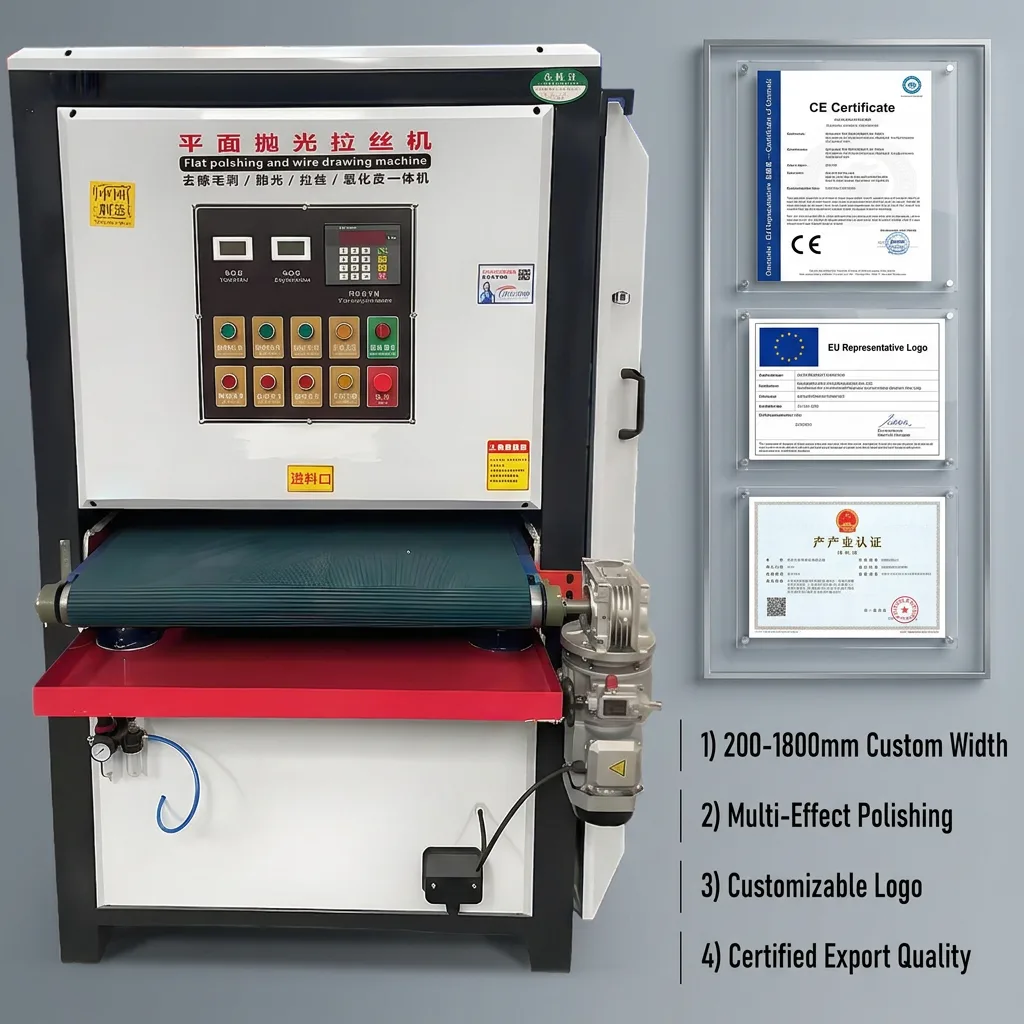
The machine's working width needs to comfortably exceed the widest sheet or plate you run — a line that just barely fits your widest part leaves no room for material drift or future jobs. Custom widths are common on flat deburring lines, with ranges from around 200 mm up to 1,800 mm or more available depending on the platform. Volume matters just as much as width: a single-head benchtop unit suits low-volume or job-shop work, while a continuous-feed production line makes more sense once deburring becomes a bottleneck in a higher-throughput operation. PCL's own MD-Series deburring platform covers that entire range in a single continuous-feed line, from 200 mm up to 1,800 mm, running on 110/220/380V power.
Wet vs Dry Processing
Wet deburring uses coolant or fluid during processing to control heat buildup and dust, which is often preferred for stainless steel and other finish-sensitive materials where heat discoloration is a concern. Dry deburring is simpler to operate and maintain, with no fluid system or wastewater to manage, but generates more heat and airborne dust, particularly on softer or higher-volume materials. Neither option is universally “better” — the right one depends on your material mix, finish requirements, and how much you want to deal with fluid handling and disposal.
Single-Head vs Double-Sided
A single-head machine processes one face of the part per pass, meaning the operator flips the part to finish the second side — workable for lower volumes, but it adds labor and handling time. A double-sided (or double-head) machine processes both faces in a single pass, which reduces handling and is generally the better fit once volume or labor cost becomes a factor.
Match the Machine to the Finish You Need
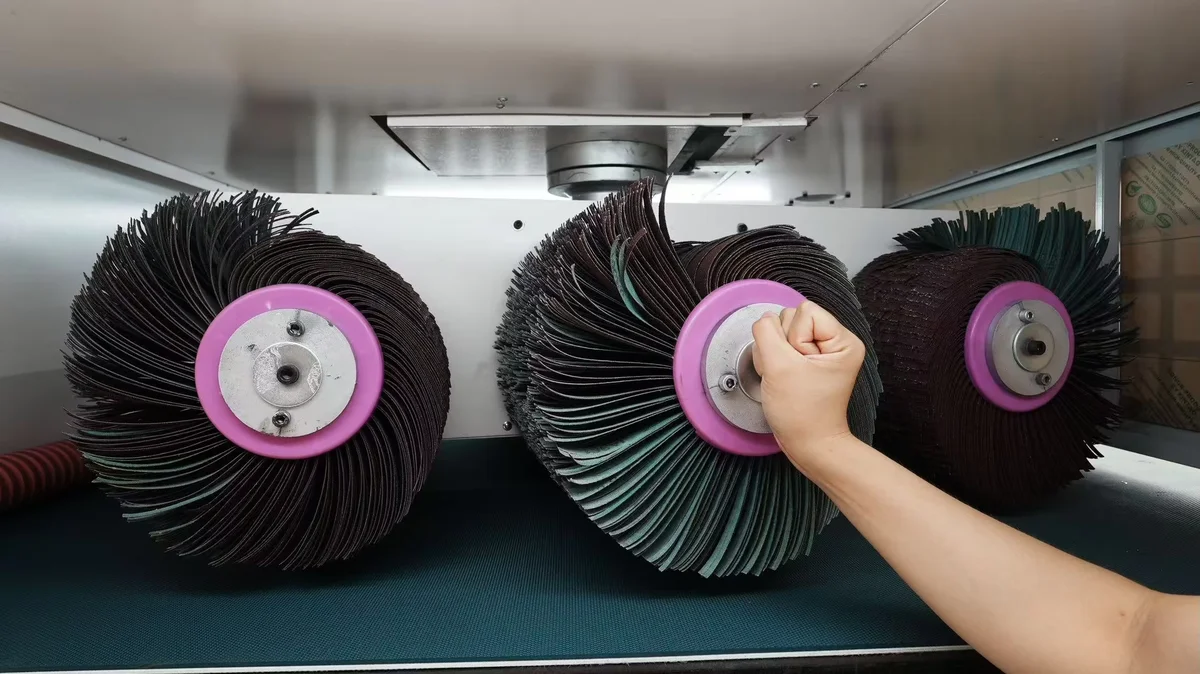
Not every job needs the same result. Some parts only need burrs removed and a safe edge — a basic edge-deburred finish. Others need a visible surface finish: matte, brushed, or mirror-polished, which typically requires different wheel or belt configurations and sometimes multiple passes. Confirm what your end customer, coating process, or downstream assembly actually requires before specifying wheels — over-speccing a finish adds cost, and under-speccing it means rework. Platforms built with an optional wire-drawing wheel, like PCL's MDC-Series, can switch between matte, brushed, edge-deburred, and mirror finishes without a separate machine.
Quick Decision Checklist
Lean Wet If…
- You process stainless steel or other heat-sensitive metals
- Dust control is a shop-floor priority
- You need a mirror or fine brushed finish
Lean Dry If…
- You mostly run carbon or mild steel
- You want simpler maintenance with no fluid system
- Basic edge-deburring is the main requirement
Frequently Asked Questions
They describe the same practical outcome. “Deburring” refers to the process of removing burrs, while “edge rounding” describes the resulting smooth, rounded edge — the terms are often used interchangeably.
Most flat deburring lines can process a range of metals, but wheel or belt selection, pressure, and feed speed often need to be adjusted per material to get a consistent result.
Many shops use wet processing for stainless steel to help control heat and preserve the surface finish, though dry processing is also used depending on the target finish and production setup.
Match the machine's working width to your widest workpiece, with some margin for material handling. Custom widths from roughly 200 mm up to 1,800 mm are available on many flat deburring platforms.