Quick Answer
Frame tube thickness, pressure roller count/material, single vs. dual-motor belt drive, belt size, CNC-controlled platform lift, automatic belt tracking, dynamic balancing, and bearing quality are what actually determine how a deburring/finishing machine performs over its working life -- and, combined with working width and automation level, what drives its price.
A flat deburring and finishing machine looks simple from the outside: a conveyor feeds a workpiece under a sanding belt, and it comes out the other side with the burrs, scale, or sharp edges removed. What's inside that box -- the frame, the drive system, the controls -- is where the real differences between machines show up, usually only after a year or two of daily production.
This isn't a product pitch. It's a breakdown of the construction details and control features that actually determine how a deburring/finishing machine performs over its working life, plus a realistic look at what drives price from one configuration to the next.
What This Class of Machine Actually Does
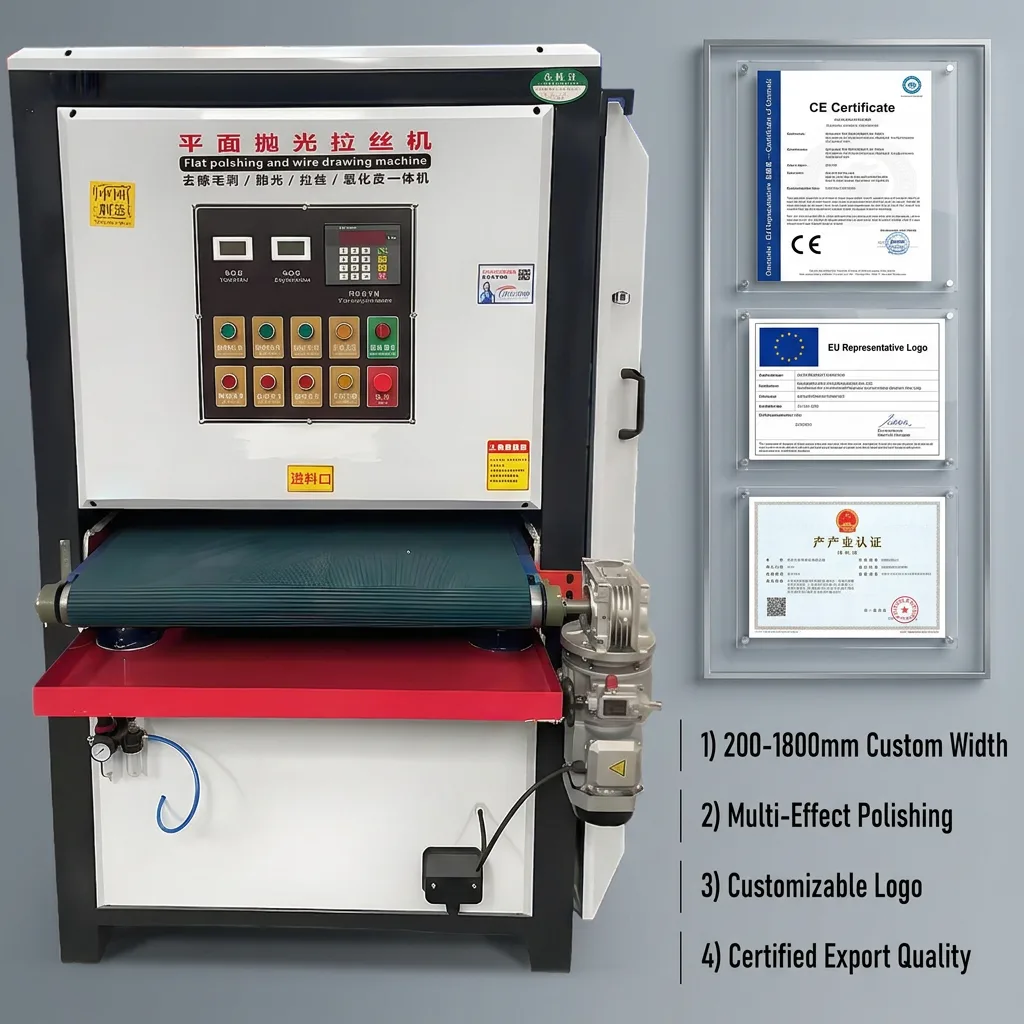
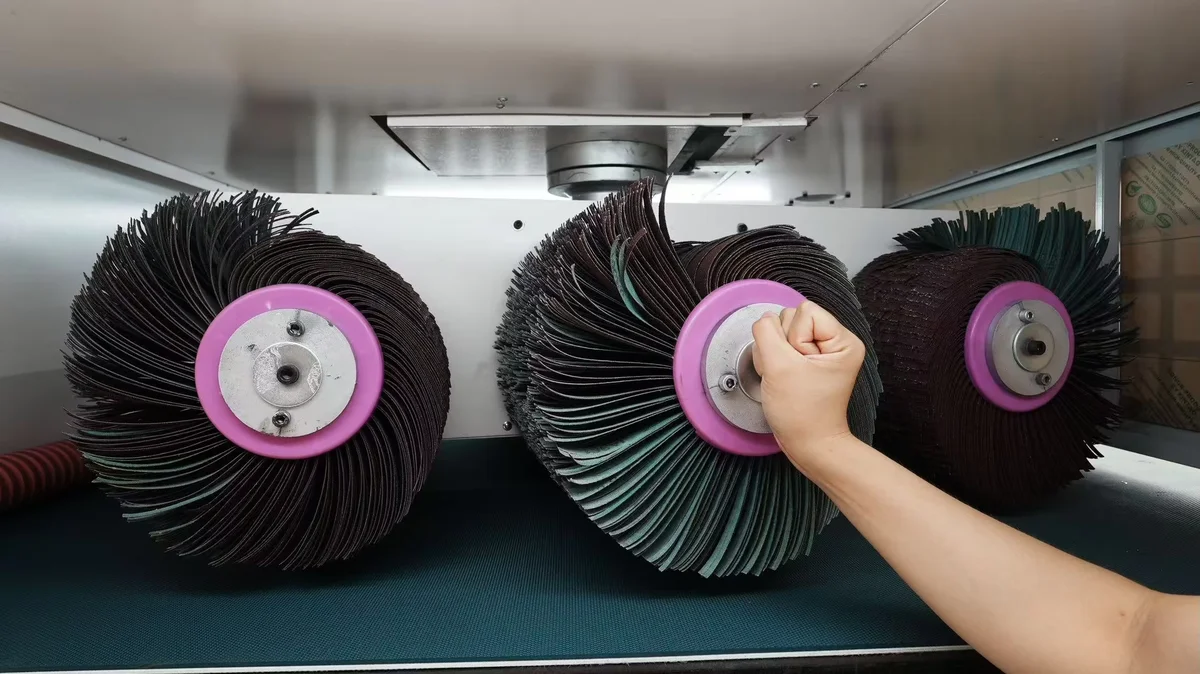
A flat deburring and finishing machine is built for ultra-precision surface work on flat parts: removing scratches, dents, and edge collapse left over from cutting or stamping, and bringing the surface to a consistent flatness, parallelism, and finish. The same platform typically handles more than one finishing job depending on what's mounted on it -- abrasive wheels, wool wheels, cloth wheels, flap wheels, nylon wheels, fiber wheels, or sanding belts -- which means one machine can be set up for deburring, rust and scale removal, pre-electroplating surface prep, a brushed/drawn-metal texture, or a true mirror finish, on both metal and most non-metal materials.
Frame Construction: Tube Size Matters More Than It Looks
The main frame is what everything else bolts to, and it's also the first place a cheaply built machine shows its age. A frame welded from heavier box-section tube -- for example 6 x 12 cm tube on a standard-duty machine, versus the thinner 4 x 6 cm tube some budget machines use -- resists twisting and vibration under continuous load far better. A frame that flexes even slightly under pressure translates directly into uneven belt contact and inconsistent finish across the width of the part, which only gets worse as the machine racks up operating hours.
Pressure Rollers: Count and Material
Pressure rollers hold the workpiece flat against the sanding belt as it feeds through. More rollers in contact with the part means more even downward pressure and less chance of the part lifting, chattering, or being pushed off-line -- which matters most on thin sheet or parts with uneven surfaces. Six rubber-faced rollers spread pressure far more evenly than three, and roller material matters too: natural rubber holds its shape and grip consistently over years of use, where synthetic rubber substitutes tend to harden and lose grip faster.
Belt Drive: Single Motor vs. Dual Motor
A machine with two sanding stations needs to drive both belts. The cheaper way to do it is one motor driving both belts through a shared linkage -- which means both stations always run at the exact same speed, and a single motor failure takes down the whole machine. A dual-motor setup, with each sanding belt driven by its own independent motor, lets each station be tuned separately and keeps a single motor issue from stopping both lines at once.
Belt Size and Material
Belt specifications are an easy way to tell what a machine was actually designed for. A metal-backed sanding belt with a longer loop -- around 1600 mm is a common spec for metal finishing duty -- runs cooler and lasts longer under continuous metal work than the shorter belts (often around 1370 mm) typically sized for woodworking sanders. If a machine's belt spec matches a wood-sanding standard, that's worth asking about directly, since metal and wood finishing put very different demands on a belt.
CNC-Controlled Platform Lift
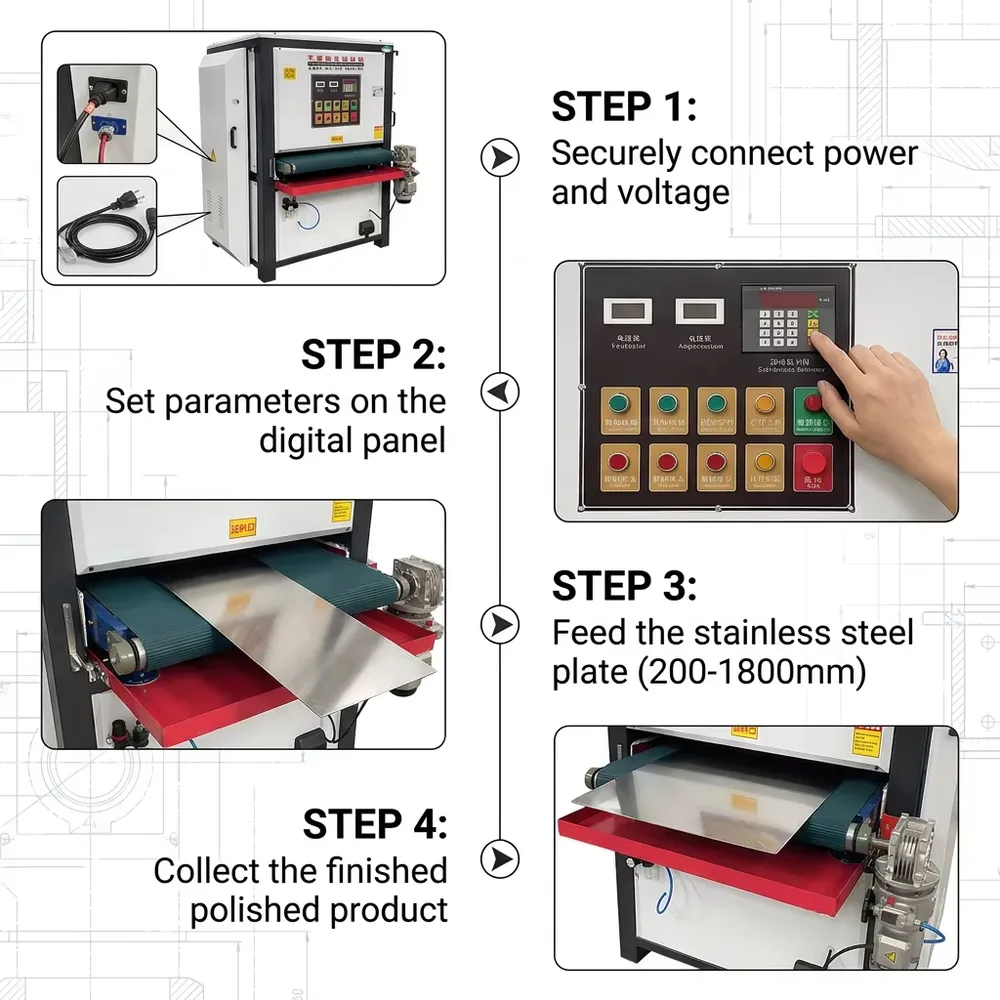
On a fully automatic configuration, the gap between the sanding belt and the workpiece is set through a CNC control panel rather than by hand: the operator enters the measured workpiece thickness directly on the keypad (for example, keying in 200 for a 2.00 mm part), and the platform lifts or lowers to that exact position automatically. A manual up/down override is still available for quick adjustments, and a fine-adjustment button on the panel compensates if the polishing pressure needs a small correction after the initial setup -- without having to re-measure and re-enter the thickness from scratch.
Automatic Belt Tracking
Sanding belts drift sideways under load if they aren't actively corrected, which is one of the more common causes of uneven finish and premature belt wear on lower-end machines. A proper setup includes a belt-tracking correction mechanism -- adjustment nuts tied to a tracking cylinder -- that keeps the belt centered as it runs. On a new setup or after a belt change, the standard practice is to pulse the machine on and immediately off to check for drift before running it continuously, then fine-tune the correction nuts a small amount at a time until the belt tracks straight.
Speed Control, Dust Extraction, and Electrical Safety
A stepless (variable) speed control lets an operator match belt speed to the material and the finish required, rather than running every job at one fixed speed. An integrated dust port keeps the work area clear of sanding debris, which matters for both finish quality and shop air quality on continuous runs. On the electrical side, this class of machine typically runs on 380V three-phase power and should always be installed with a grounding wire and a leakage (earth-fault) protector by a qualified electrician -- cutting corners on the electrical installation is the single most avoidable safety risk on equipment like this.
Dynamic Balancing and Bearings
It's worth asking whether the rotating components -- rollers, drive shafts, pulleys -- are dynamically balanced, ideally through two balancing passes rather than one. An unbalanced rotating assembly shows up over time as vibration, uneven wear, and a shorter bearing life, even if the machine runs fine on day one. High-speed, maintenance-free bearings and heat-treated bearing seats both reduce wear from the friction and heat that build up during continuous operation -- details that don't show up in a photo but do show up in how often the machine needs service.
Configuration Tiers and What Drives Price
Standard, single-motor
- Typical fit: lower-volume shops, simpler finish requirements
- Price range: Contact for Quote
- Key cost driver: working width + base automation level
Full-automatic, dual-motor
- Typical fit: production floors running two finishes or higher throughput
- Price range: Contact for Quote
- Key cost driver: independent motor count + CNC auto-lift control
Heavy-duty, reinforced platform
- Typical fit: thicker/heavier workpieces, continuous multi-shift use
- Price range: Contact for Quote
- Key cost driver: reinforced platform material + upgraded rollers
What Actually Moves the Price Within Each Tier
Within any one of those configuration tiers, the main variables that move price are working width (wider belts and frames cost more across the board), whether the platform lift is manual or fully CNC-automated, single vs. dual motor belt drive, and optional add-ons like a wire-drawing wheel attachment, a water-based dust/mist suppression system, permanent-magnet workholding for thin ferrous sheet, or vacuum workholding for non-magnetic materials. None of these are reflected in a single headline number, which is why a real quote needs your material, thickness range, and target finish rather than a model number alone.
What a Real Warranty Should Cover
Worth asking for
- Coverage on all components, not just the motor or control board
- A clearly stated warranty period (two years is a reasonable benchmark for this class of machine)
- No per-incident service fee during the warranty period
- A direct manufacturer relationship, not just a reseller's own goodwill policy
Red flags
- Warranty terms that aren't written down anywhere
- Coverage limited to "manufacturing defects" with no further detail
- No clarity on who actually handles a warranty claim
Frequently Asked Questions
Yes, mainly under continuous load. A heavier box-section frame resists the flexing and vibration that a thinner frame develops over time, which keeps belt contact and pressure consistent across the width of the part instead of drifting as the machine ages.
A single motor driving two sanding belts locks both stations to the same speed and makes one motor failure stop the entire machine. Independent motors per belt allow each station to be tuned separately and limit downtime from a single motor issue to just that station.
A longer belt loop spreads heat and wear over more belt surface during continuous operation, which is why metal finishing machines typically spec longer, metal-rated belts rather than the shorter belts common on wood-sanding equipment.
On a CNC-controlled configuration, the operator enters the measured workpiece thickness on a keypad and the platform lifts or lowers to that position automatically, with a fine-adjustment button available if the polishing pressure needs a small correction. A manual override is still available for quick jobs.
Belt drift happens on any belt-driven finishing machine if the tracking isn't actively corrected. It's normal to check for drift briefly when the machine is first switched on or after a belt change, and to fine-tune the tracking correction nuts in small increments until the belt runs straight -- a machine without a proper tracking/correction mechanism will drift more often and wear belts faster.
Look for coverage across all major components (not just the motor), a clearly stated time period, no per-incident service charges during that period, and a direct line to the manufacturer rather than only a reseller's informal support.
Price depends on working width, automation level (manual vs. CNC-controlled lift), single vs. dual-motor drive, and options like wire-drawing attachments or workholding systems -- a meaningful number needs your material, thickness range, and target finish, not just a model name.